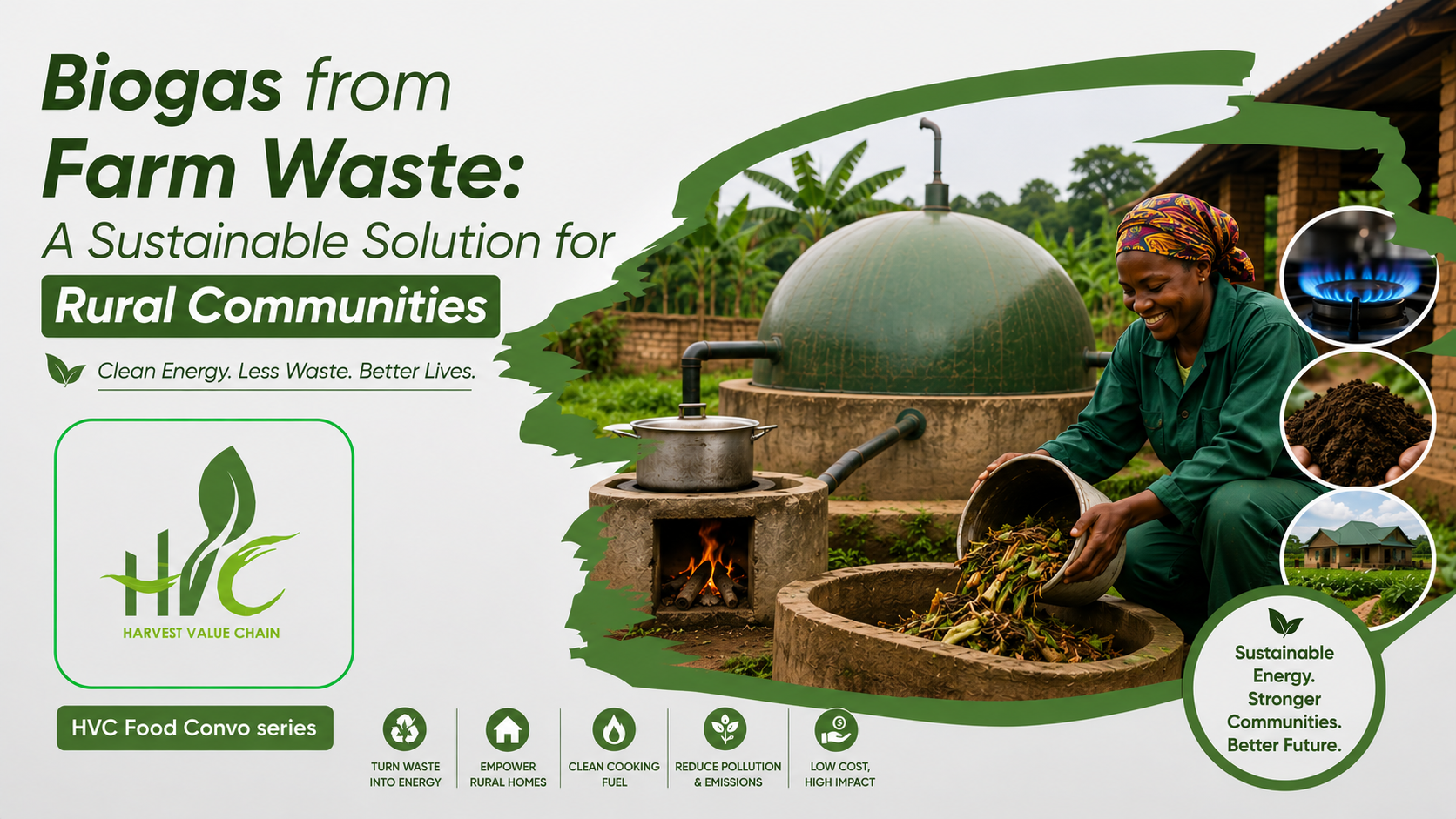
A Harvest Value Chain Limited Insight
Across rural Nigeria farms generate large volumes of waste every season. Crop residues animal dung and processing by-products often pile up with nowhere useful to go. At Harvest Value Chain Limited we see this waste differently. With the right systems in place, it can become a source of clean energy income and improved farm productivity.
That solution is biogas.
What Is Biogas?
Biogas is a renewable fuel produced when organic material breaks down in the absence of oxygen. This process is called anaerobic digestion. Farm waste such as animal manure crop residues and food processing leftovers is fed into a digester where bacteria break it down over time. The result is a mixture of gases mostly methane and carbon dioxide that can be burned for cooking heating or electricity generation.
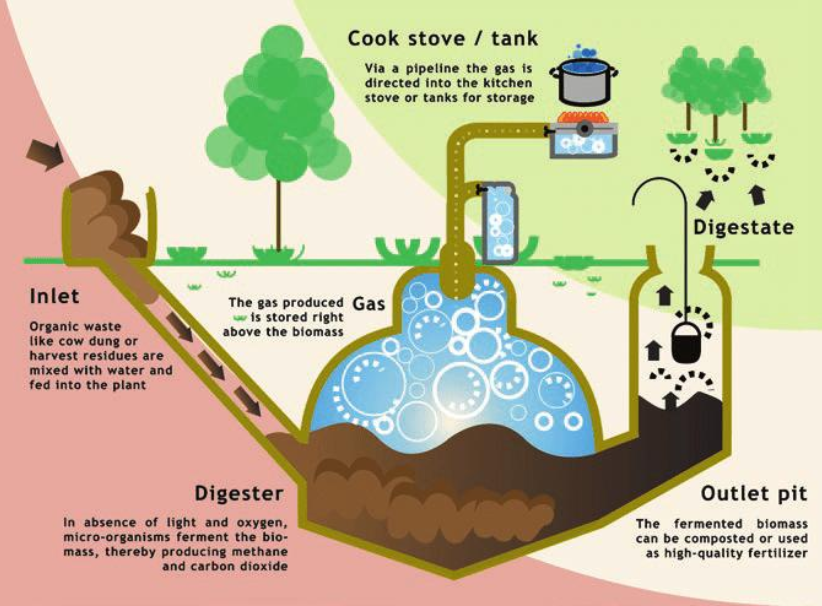
What remains after digestion is not waste either. The leftover material called digestate is a nutrient-rich organic fertilizer that can be applied directly to farmland.
Why Biogas Matters for Rural Communities
A Reliable Source of Clean Energy
Many rural communities in Nigeria still depend on firewood charcoal or kerosene for cooking and lighting. These sources are expensive time-consuming to gather and harmful to health when used indoors. Biogas offers a cleaner and more consistent alternative that can be produced locally from materials already available on the farm.
Reduced Waste and Better Sanitation
Uncontrolled animal waste and crop residue can pollute water sources attract pests and create unpleasant conditions around farms and homes. Channeling this waste into a biogas digester keeps it contained reduces odor and lowers the risk of contamination.
A Natural Fertilizer Byproduct
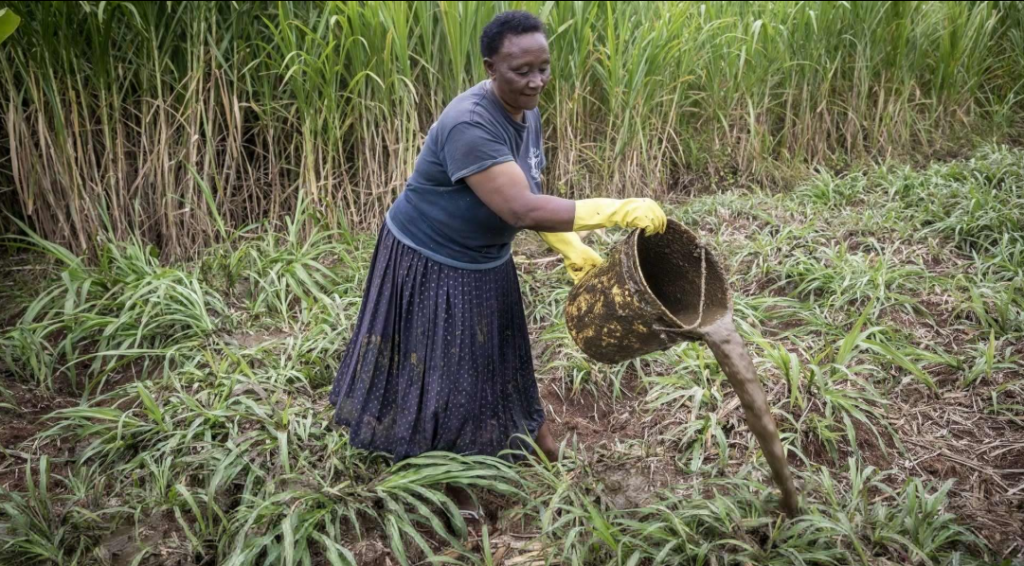
The digestate produced by biogas systems is rich in nitrogen phosphorus and potassium. Farmers can use it to improve soil health and reduce their dependence on expensive chemical fertilizers. This closes the loop between livestock crop production and soil management on the same farm.
Lower Energy Costs
Once a biogas system is running the fuel it produces is essentially free. Farmers and households no longer need to spend scarce income on firewood charcoal or cooking gas. Over time this can free up money for other household or farm investments.
Reduced Greenhouse Gas Emissions
When organic waste decomposes in open piles or is burned it releases methane and other greenhouse gases directly into the atmosphere. Capturing that same waste in a biogas digester and using the gas as fuel prevents much of that pollution while still producing usable energy.
How a Basic Farm Biogas System Works
A typical small-scale biogas system for a farm or rural household includes the following components:
- Feedstock collection: Animal manure crop residue or food waste is gathered and mixed with water
- Digester tank: The mixture is fed into a sealed tank where oxygen is excluded
- Anaerobic digestion: Bacteria break down the organic material over several weeks producing biogas
- Gas storage and delivery: The biogas is captured and piped to a stove lamp or generator
- Digestate collection: The leftover slurry is removed and applied to fields as fertilizer
Systems can range from simple low-cost digesters built from local materials to larger engineered units designed for commercial farms or community-scale energy production.
Challenges to Consider
Biogas is not without its obstacles particularly in rural settings.
- Upfront cost: Building a digester requires initial investment that some smallholder farmers may struggle to afford without support
- Technical knowledge: Proper design construction and maintenance require some training and ongoing attention
- Consistent feedstock: A steady supply of organic waste is needed to keep gas production reliable
- Climate sensitivity: Digestion works best within certain temperature ranges which can affect performance in some regions
None of these challenges are insurmountable. With the right training financing and support structures rural communities across Nigeria have successfully adopted biogas at both household and cooperative levels.
The Bigger Opportunity for Agricultural Value Chains
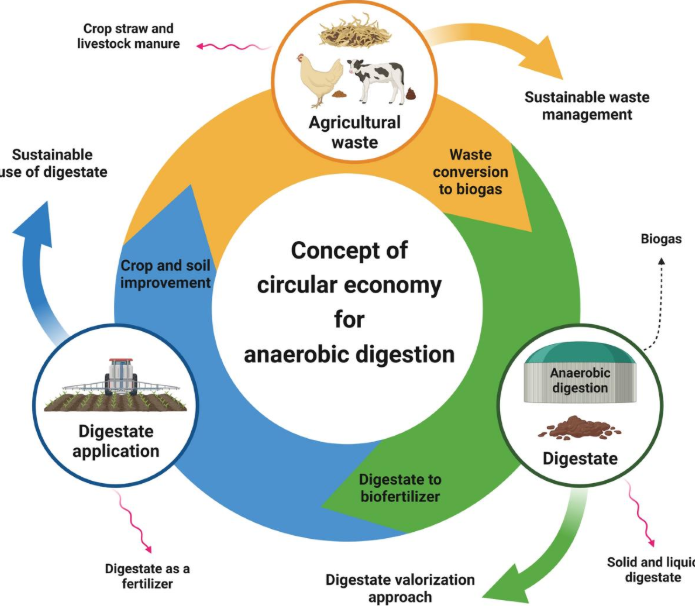
Biogas is a clear example of how waste in one part of an agricultural value chain can become value elsewhere in that same chain. Livestock waste becomes cooking fuel and fertilizer. Crop residue that would otherwise be burned or discarded becomes an energy input. This kind of circular thinking strengthens the resilience and profitability of farming communities rather than treating waste as a cost to be managed.
As more attention turns toward sustainable agriculture and rural energy access in Nigeria biogas stands out as a practical and proven technology rather than an experimental one.
How Harvest Value Chain Limited Can Help
At Harvest Value Chain Limited we work with farmers and cooperatives across Ilorin and Kwara State to strengthen every link in the agricultural value chain including waste management and resource efficiency. If your community or farm is exploring biogas as a source of clean energy and improved soil health, we are glad to support that journey from planning through implementation.
Sustainability in agriculture is not only about what we grow. It is also about what we do with what is left behind.
Leave a Reply