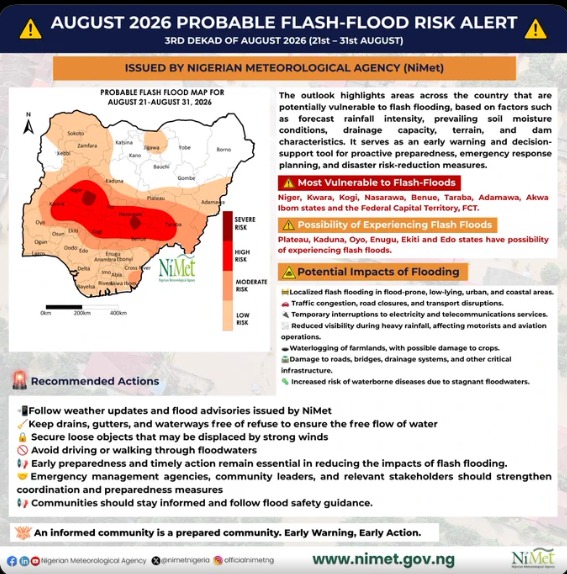
The Nigerian Meteorological Agency (NiMet) has issued a probable flash-flood risk alert covering 21–31 August 2026, warning of the potential for localised flash flooding in vulnerable parts of Nigeria. The outlook particularly identifies flood-prone, low-lying, urban and riverside communities as areas requiring increased vigilance. For agriculture, logistics and other businesses operating across vulnerable areas, the alert highlights an important reality: weather risk can quickly become operational risk.
Areas Requiring Increased Vigilance
NiMet’s late-August outlook identifies Kwara, Niger, Kogi, Nasarawa, Benue, Taraba, Adamawa, Akwa Ibom and the Federal Capital Territory among the areas highlighted for flash-flood risk during the period.
The agency’s broader weather forecasts also indicate thunderstorms and rainfall across several parts of the country. On August 24, for example, NiMet forecasts included thunderstorms and rainfall affecting parts of Plateau, Benue, Enugu and Cross River, among other locations.
Importantly, a flash-flood risk outlook is an early-warning and preparedness tool. It does not mean that every community or business within the identified areas will experience flooding.
What Could This Mean for Agriculture?
Agriculture is particularly exposed to excessive rainfall Heavy or persistent rainfall can contribute to:
- Waterlogged farmland
- Soil erosion and nutrient loss
- Damage to standing crops
- Difficulties accessing farms
- Delays in harvesting and post-harvest handling
- Increased challenges moving produce to markets
For farmers, preparedness should therefore go beyond protecting crops. Farm access, drainage, harvesting schedules and post-harvest logistics also need attention. Where feasible, mature crops can be harvested ahead of severe weather, while drainage channels around vulnerable fields should be inspected and cleared.
Implications for Supply Chains and Logistics
Flooding does not need to completely submerge a major road to disrupt a supply chain. A damaged road section, flooded access route or temporary traffic diversion can increase travel time, delay deliveries and raise transportation costs.
Businesses operating in or through vulnerable areas should therefore:
- Review frequently used transport routes.
- Identify alternative routes.
- Allow additional transit time.
- Communicate potential delays with customers and suppliers.
- Monitor local road and weather conditions before dispatching vehicles..
Infrastructure and Business Continuity
Heavy rainfall and thunderstorms can also place pressure on business facilities and critical infrastructure. Companies should inspect drainage around offices, warehouses, processing facilities and farms. Sensitive equipment and inventory should be elevated where flooding is possible.
Businesses should also consider backup power arrangements and data protection measures, particularly where operations depend heavily on electricity, telecommunications or digital systems.
What Businesses Should Do Now
1. Protect vulnerable assets
2. Inspect drainage systems
3. Review logistics routes
4. Protect critical information
5. Monitor official updates
Turning Weather Alerts into Business Preparedness
Weather forecasts are not simply information for farmers or commuters. For modern businesses, they can serve as early-warning signals for operational planning.
A company that monitors weather risk early can adjust transportation schedules, protect inventory, modify farm activities and communicate with customers before disruption occurs.
The goal is not to predict every disruption; The goal is to be prepared before the disruption happens. As Nigeria’s agricultural and logistics systems become increasingly exposed to climate variability, integrating weather intelligence into everyday business decisions will become increasingly important.
At HVC, we believe that building resilient food systems starts with anticipating risks, not reacting to them after the damage is done.
Leave a Reply