Category: Business Growth | Agribusiness | Value Addition
Reading Time: 4–5 minutes
Published: August 4, 2026
Africa produces billions of dollars’ worth of agricultural products every year, yet countless food businesses never grow beyond local markets. While entrepreneurs often blame funding, the real obstacles are far more complex. From weak branding to inefficient supply chains, these hidden challenges quietly limit growth. Understanding them is the first step toward building a business that can compete nationally and globally.
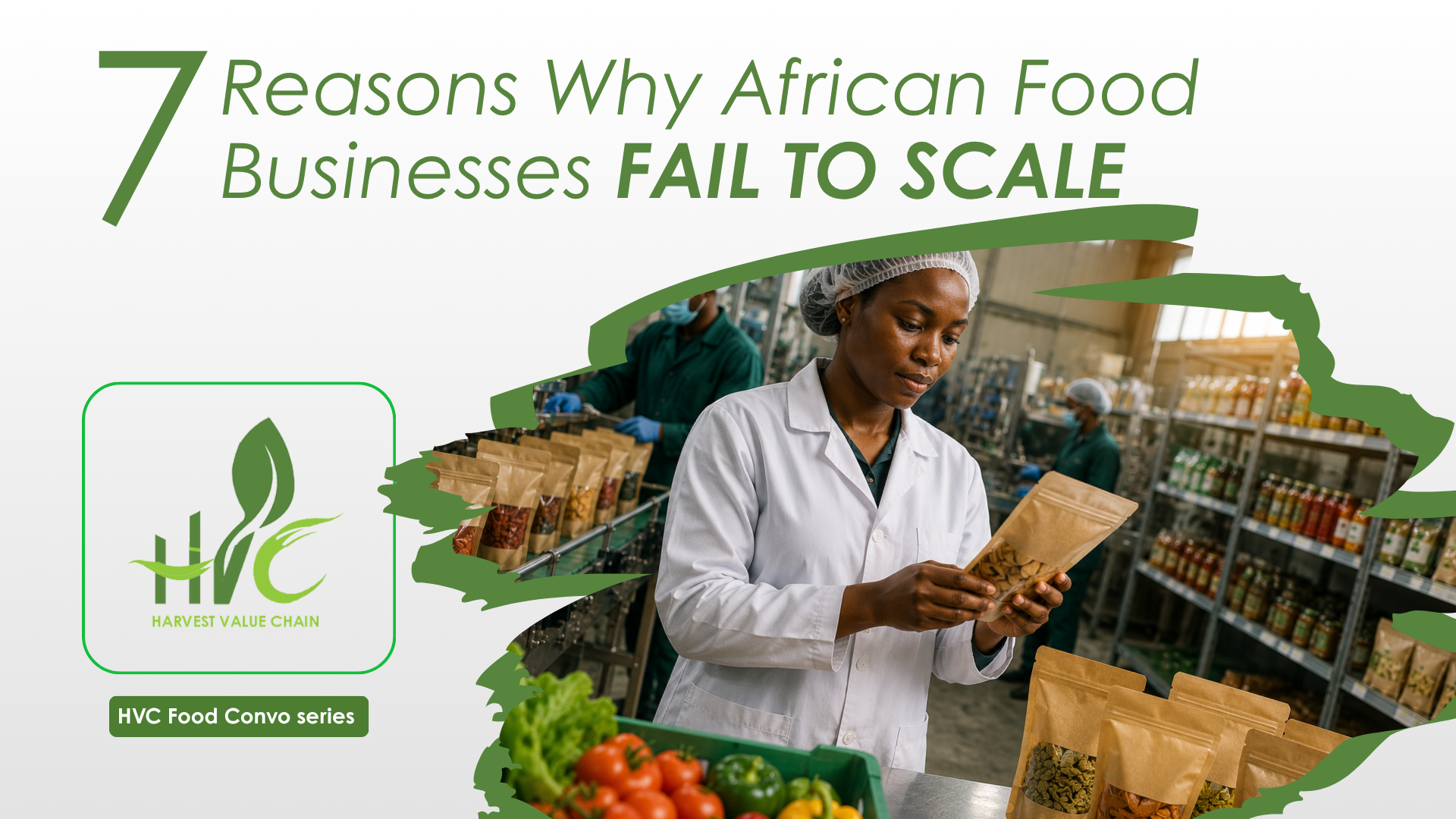
Seven Reasons Why African Food Businesses Fail to Scale
Africa produces an abundance of agricultural products, yet many food businesses struggle to grow beyond local markets. Every year, ambitious entrepreneurs launch promising ventures with exceptional products, but only a handful successfully scale into recognizable regional or international brands.
The problem is rarely passion or hard work. More often, it’s a combination of overlooked business fundamentals. If Africa is to unlock the full potential of its food industry, entrepreneurs must understand what prevents growth and how to overcome it.
1. Lack of Value Addition
Many businesses sell raw agricultural produce instead of processing it into higher-value products. Raw commodities typically generate lower profit margins and are vulnerable to fluctuating market prices.
For example, turning fresh tomatoes into tomato paste or dried tomato flakes can significantly increase product value, improve shelf life, and open access to new markets. Businesses that invest in value addition position themselves for stronger profitability and long-term sustainability.
2. Poor Branding and Packaging
Consumers often judge products before they taste them. Weak branding, unattractive packaging, or missing product information can make even high-quality food products appear unprofessional.
Modern consumers want products that inspire confidence. Clear labels, attractive designs, nutritional information, and professional packaging help businesses compete with established brands both locally and internationally. A great product deserves packaging that tells its story.
3. Limited Access to Finance
Scaling requires capital. Many African food businesses remain small because they cannot afford processing equipment, storage facilities, transportation, certifications, or marketing.
While funding opportunities exist through banks, investors, grants, and development programs, many entrepreneurs lack the documentation, financial records, or business plans required to secure investment. Strong financial management makes businesses more attractive to funders.
4. Weak Supply Chain Management
Food businesses rely on consistent access to quality raw materials. Seasonal shortages, post-harvest losses, poor transportation, and inconsistent supplier relationships can disrupt production and delay customer deliveries.
Successful businesses build resilient supply chains by partnering with reliable farmers, improving storage systems, and planning for seasonal fluctuations. Consistency builds customer trust.
5. Ignoring Food Safety and Quality Standards

Many promising businesses struggle to enter supermarkets or export markets because they fail to meet food safety requirements. Poor hygiene, inconsistent production processes, and lack of proper certifications reduce consumer confidence.
Implementing quality control systems and complying with regulatory standards not only protects consumers but also creates opportunities to access premium markets. Quality is not an expense; it is an investment.
6. Resistance to Innovation
Consumer preferences evolve rapidly. Businesses that refuse to adapt often fall behind competitors. Innovation may involve introducing healthier product options, adopting sustainable packaging, using digital sales channels, or improving production efficiency through technology. The most successful food businesses constantly learn, experiment, and improve. Growth belongs to businesses willing to evolve.
7. Ineffective Marketing
Some entrepreneurs believe that having an excellent product automatically guarantees sales. Unfortunately, customers cannot buy products they do not know exist.
Businesses that fail to leverage social media, digital marketing, storytelling, partnerships, and customer engagement often remain invisible despite offering outstanding products. Visibility drives growth.
FINAL THOUGHTS
Africa’s food industry holds extraordinary potential. With a growing population, expanding urban markets, and increasing demand for processed foods, the opportunities have never been greater.
However, sustainable growth requires more than producing quality food. Entrepreneurs must embrace value addition, build trusted brands, strengthen supply chains, maintain high-quality standards, invest in effective marketing, secure financing, and continuously innovate.Businesses that address these challenges today will be the ones shaping Africa’s food systems tomorrow.
At HVC, we believe that empowering agribusinesses with practical knowledge, sustainable solutions, and innovative approaches is essential to building a resilient African food ecosystem. The journey from a small local business to a respected food brand begins with making the right decisions, one step at a time.
Leave a Reply