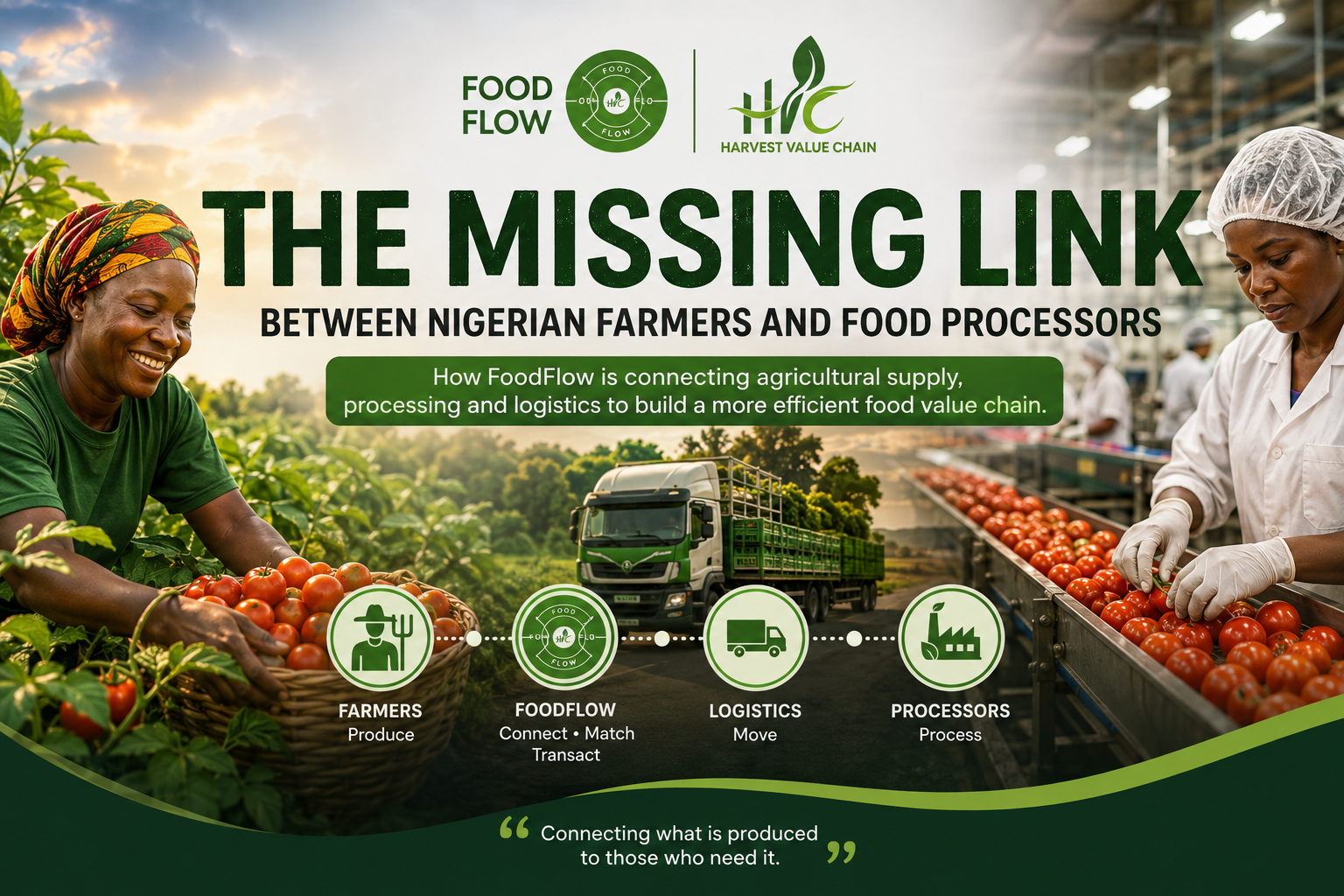
The Missing Link Between Nigerian Farmers and Food Processors
How FoodFlow is connecting agricultural supply, processing and logistics to build a more efficient food value chain
It is harvesting season; A farmer has spent months nurturing a crop. The plants are ready, the harvest is finally coming in, and there is produce sitting on the farm waiting to be sold. But there is one problem.
Who is buying?
A few kilometers away, a food processor is preparing for another week of production. Their machines are ready, their workers are ready, and orders are waiting to be fulfilled. But there is another problem.
Where is the raw material?
The farmer has the produce. The processor needs the produce. Yet somehow, connecting the two can still be difficult. And even when they do connect, there is one more question:
How does the produce get from the farm to the processing facility?
This is the kind of gap that exists quietly across agricultural value chains.
When Supply and Demand Don’t Meet
Nigeria has no shortage of farmers, agricultural production or businesses involved in food processing. The challenge is often what happens between them.
A farmer may rely on a familiar buyer who comes to the farm. A processor may depend on a small network of suppliers they have built over time. When everything goes according to plan, the system works, but agriculture rarely works perfectly.
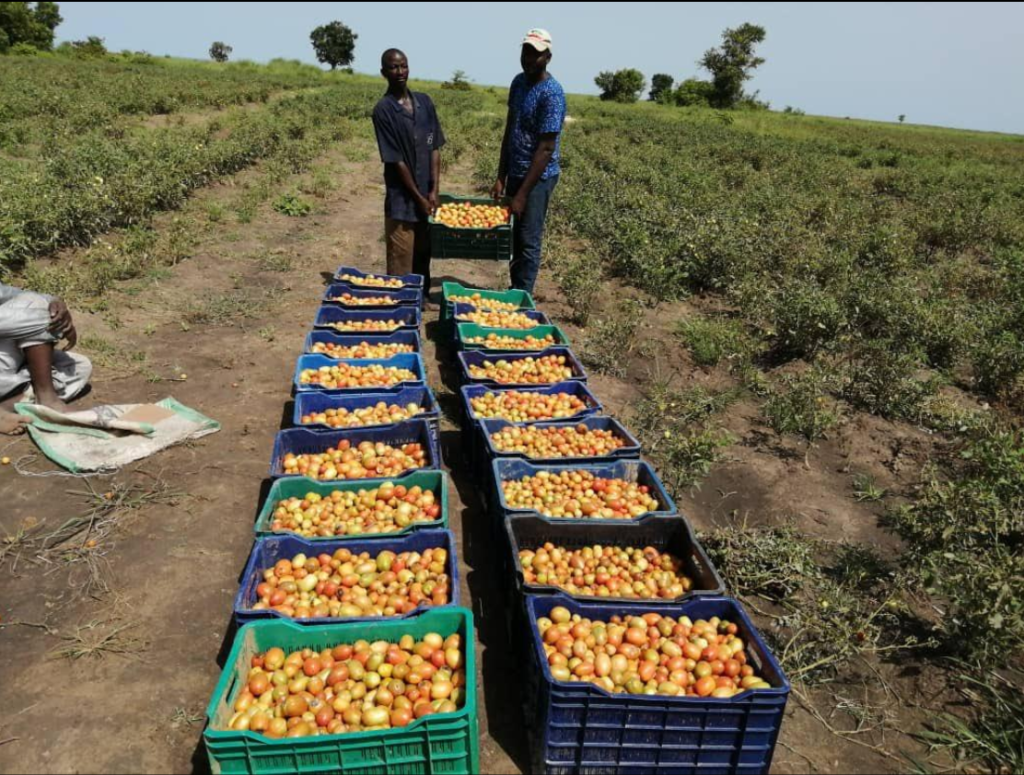
A farmer’s usual buyer may not need the entire harvest. A processor’s regular suppliers may not have enough produce during a period of high demand. A supplier may have the right quantity but be too far away.
And sometimes, the produce is available, the buyer is ready, but transportation becomes the problem. The result is a supply chain where opportunities exist on both sides, but the connection between them is weak.
This is where FoodFlow enters the story.
One Platform, Two Sides of the Same Problem
FoodFlow was built around a simple idea:
What if farmers and food processors could find each other more easily, while the movement of produce between them could also be coordinated?
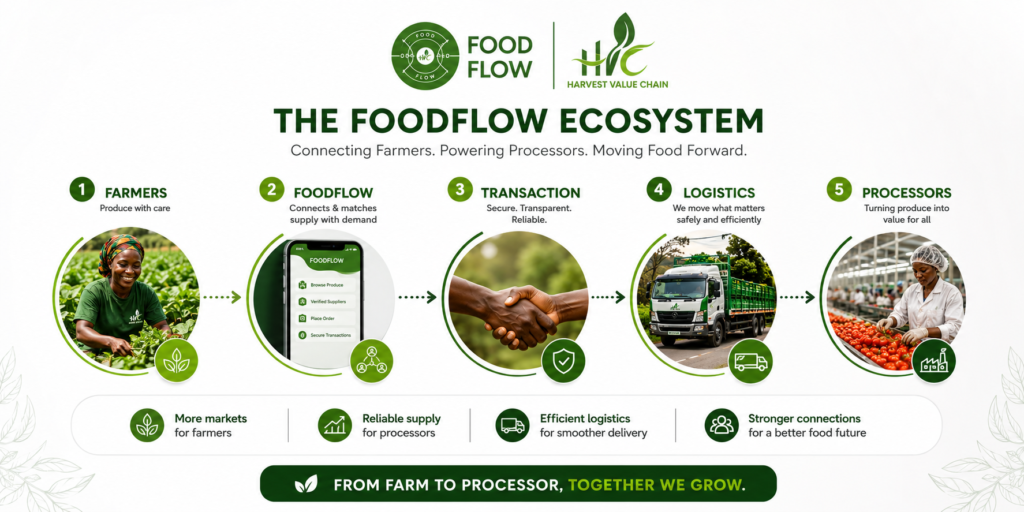
Instead of treating farmers, processors and logistics as completely separate parts of the agricultural system, FoodFlow brings them into one ecosystem.
A farmer can make available produce visible to potential buyers. A processor can search for agricultural products and suppliers that match its needs. And once a transaction is agreed, logistics can help move the produce from the farm to its destination.
The idea isn’t to tell farmers to abandon the buyers they already know. It isn’t to tell processors to throw away the supplier relationships they have spent years building. It is about giving both sides more options and a more structured way to manage agricultural transactions.
Imagine a Farmer with Two Tonnes of Tomatoes
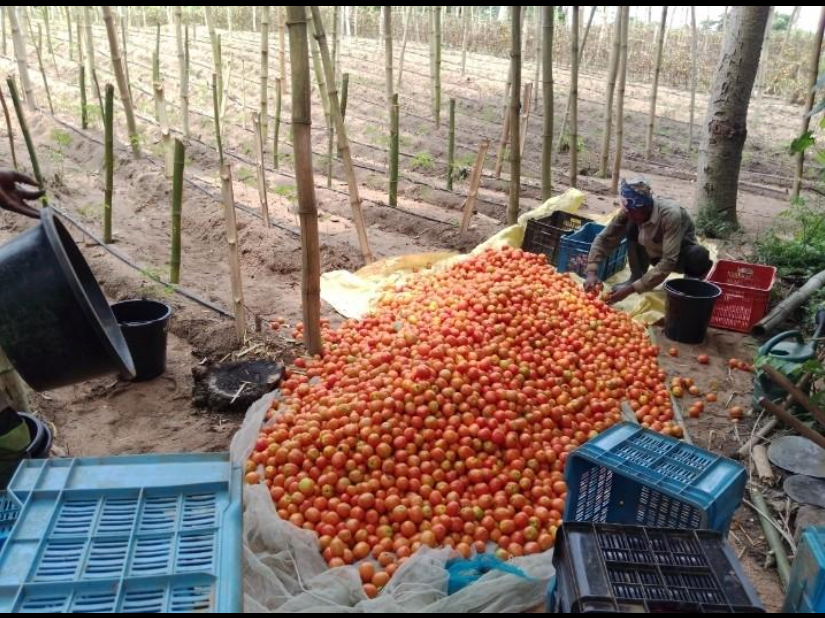
Imagine a farmer has harvested two tonnes of tomatoes. In the traditional system, the farmer may call existing buyers, wait for traders to arrive or take the produce to a local market.
Now imagine that the farmer can also make that supply visible to processors looking for tomatoes. The farmer isn’t guaranteed a buyer simply because the produce is listed. But the opportunity to reach more potential buyers changes the equation. And if a processor needs those tomatoes, the platform can become the connection point between them. Suddenly, the journey looks different:
Farmer → FoodFlow → Processor
But the story doesn’t end there.
The Produce Still Has to Move
The processor may be 30, 50 or even hundreds of kilometres away. The tomatoes still need to get there.
This is where the logistics side of FoodFlow becomes important.
Rather than treating transportation as an afterthought, FoodFlow incorporates logistics into the supply process, helping coordinate the movement of agricultural produce from suppliers to processors. Because connecting a buyer and a farmer is only useful if the product can actually make the journey.
The bigger picture therefore becomes:
Supply → Connection → Transaction → Logistics → Processing
And What About the Processor Who Already Has Farmers?
This is where things get interesting. Many processors already have established suppliers.
So why would they need FoodFlow?. Because FoodFlow doesn’t necessarily have to replace those relationships.
A processor with 20 regular farmers could potentially bring those suppliers into the platform and use it to make procurement and logistics more structured. And when those suppliers cannot meet demand, FoodFlow can provide access to additional potential suppliers.
The value isn’t simply: “Find farmers.”
It is: “Make your supply network easier to manage and expand when necessary.”
But Technology Alone Isn’t Enough
There is another reality FoodFlow has to confront. Not every farmer is going to download an app, create a profile and immediately understand how to use every feature.
And that’s okay. Technology should adapt to people, not the other way around. This is why field engagement matters.
Instead of simply telling farmers to download FoodFlow, field teams can visit farming communities, understand what farmers produce, identify their available quantities and help them get onboarded. For farmers who are less comfortable with technology, assisted onboarding can make the first step easier.
The objective isn’t to create thousands of inactive accounts.
The objective is to help real farmers complete real transactions.
Building the Missing Link
The future of African agriculture isn’t only about producing more. It is also about building better systems around what is already being produced.
Systems that connect farmers to markets. Systems that help processors access reliable agricultural supply. Systems that make logistics easier. Systems that create more transparency and structure around transactions.
That is the opportunity FoodFlow is pursuing.
Not simply another agricultural app. Not simply another marketplace, But a connected ecosystem where farmers, processors and logistics providers can work together more efficiently.
Because sometimes the biggest opportunity isn’t creating something completely new. Sometimes, it is simply connecting the pieces that already exist. And that connection could be the missing link between the farm and the factory.
Leave a Reply