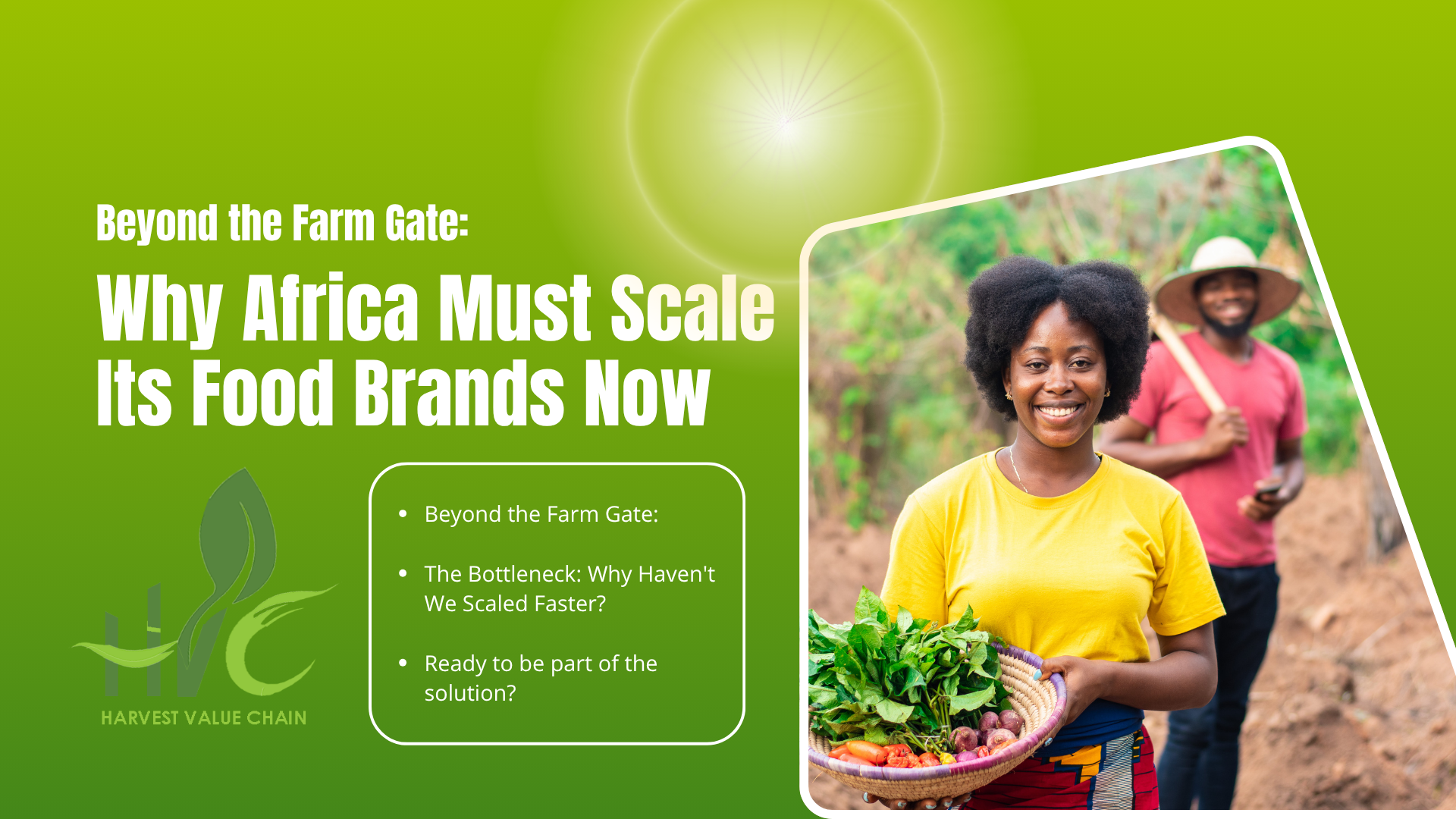
Africa holds 60% of the world’s uncultivated arable land, yet its footprint on global supermarket shelves remains remarkably small. For decades, the continent’s agricultural narrative has been trapped in a frustrating cycle: we export raw commodities at rock-bottom prices and import finished, packaged foods at a premium.
We export raw cocoa and import chocolate. We ship out raw cashew nuts and buy them back roasted, branded, and heavily marked up.
Farming is just the beginning of the value chain. To truly unlock the continent’s economic potential, we must shift our focus from just growing food to building, processing, and scaling recognisable food brands. Here is why scaling African food brands is no longer optional… it is an economic imperative.
1. Retaining Wealth Through Value Addition
The real money in agriculture isn’t made at the farm gate; it’s made in the factory, the packaging plant, and the retail shelf. When an African agribusiness transitions from selling raw produce to selling a branded, finished product, the profit margins expand exponentially.
Scaling local food brands means keeping the value-add process on the continent. This translates directly into more manufacturing jobs, better infrastructure, and a more robust middle class. Every time a raw commodity leaves the continent for processing elsewhere, we are exporting our own wealth and job opportunities.
2. Meeting the Global Demand for Bold Flavours
The global palate is rapidly shifting. Consumers worldwide are looking for healthier, more sustainable, and more diverse food options.
Indigenous African superfoods and staples, like fonio, teff, baobab, hibiscus (zobo/sorrel), and moringa, are moving from niche cultural markets to mainstream global demand. Authentic, ready-to-eat African flavours, sauces, and spices have a massive, untapped audience. By scaling our food brands, we can dictate the quality, narrative, and profits of our own cultural exports, rather than watching international companies co-opt our indigenous ingredients.
3. Building Food Security and Economic Resilience
Relying on imported branded foods leaves African nations deeply vulnerable to global supply chain shocks, inflation, and currency devaluation. When global logistics freeze -as seen during recent global crises- countries that rely heavily on imports face immediate food security threats.
Strong, scaled local food brands build internal resilience. When local processors buy consistently from local farmers to feed local packaging plants, it creates a closed-loop economy that protects both the farmer and the consumer from international market volatility.
The Bottleneck: Why Haven’t We Scaled Faster?
If the opportunity is so clear, why aren’t more African food brands dominating the shelves?
Because scaling a food brand requires more than a great recipe or beautiful packaging. It requires capital and an unbreakable farm-to-factory supply chain. You cannot build a global brand if your raw material supply is inconsistent in quality or volume, or if you lack the operational funding to fulfil massive retail purchase orders.
Overcoming these operational hurdles is the exact gap the ecosystem must bridge next.
Ready to be part of the solution?
The future of African agriculture belongs to those who process, package, and scale. Join the conversation and learn how to overcome the critical hurdles of supply chains and funding.
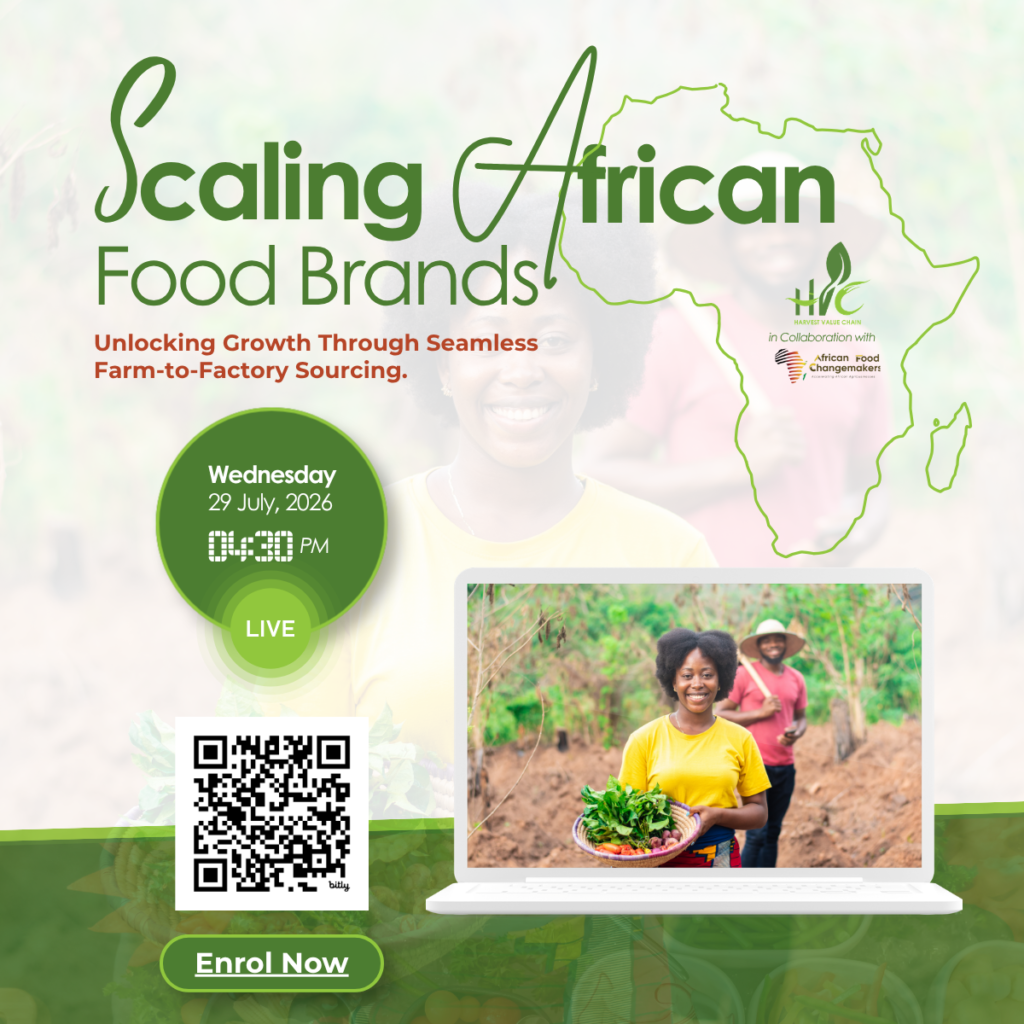
Subscribe to the Harvest Value Chain (HVC) mailing list to get exclusive insights, resources, and early access to Scaling African Food Brands, an upcoming African food convo series by Harvest Value Chain Limited designed specifically to help agri-SMEs fix their operations and access capital.
Leave a Reply