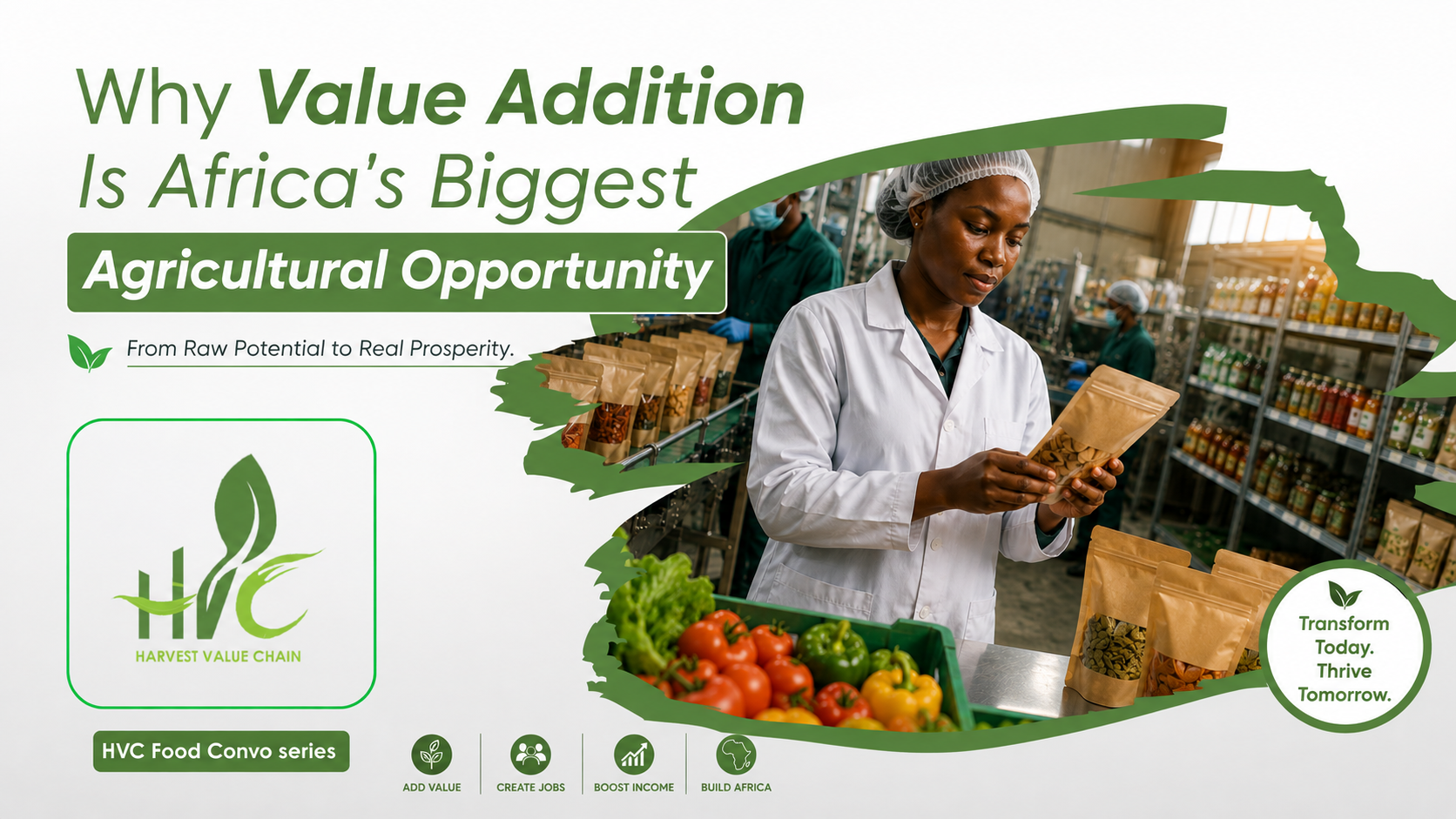
Why Value Addition Is Africa’s Biggest Agricultural Opportunity
For decades, a single, frustrating narrative has defined African agriculture: harvest the raw goods, ship them overseas, and buy them back at ten times the price.
Africa grows over 70% of the world’s cocoa yet captures less than 6% of the global chocolate industry’s estimated $130+ billion revenue (UNCTAD, 2024; UNCTAD, 2016). Millions of tons of cashew nuts, coffee beans, tropical fruits, and raw grains leave the continent’s ports every month in burlap sacks. The real profit along with jobs, technology, and economic stability is exported right alongside them.
It is time to change the equation. Value addition is no longer just a smart business strategy; it is Africa’s single biggest agricultural opportunity.
Moving Beyond the “Export Raw, Import Refined” Trap
When a country exports raw farm produce, it also exports much of its economic potential. Raw commodities are highly vulnerable to price volatility, weather disruptions, and fluctuations in international markets.
Value addition, processing, packaging, preserving, and branding agricultural products locally transforms fragile raw crops into resilient, high-margin finished goods.
- Raw Cocoa vs. Gourmet Chocolate: Raw cocoa beans are sold by the metric ton at volatile commodity prices, while processed chocolate bars, cocoa butter, and cosmetic-grade cocoa products command premium retail prices and significantly higher profit margins (UNCTAD, 2016).
- Fresh Produce vs. Shelf-Stable Goods: Up to 40%–50% of fresh fruits and vegetables in Sub-Saharan Africa are lost before reaching consumers. Simple processing methods—such as drying, pureeing, canning, or juicing—can significantly reduce post-harvest losses while creating entirely new product lines (FAO, 2019). By shifting from harvesting to processing, local agribusinesses can unlock value that would otherwise be captured by overseas manufacturers.
Four Drivers of Africa’s Agro-Processing Boom
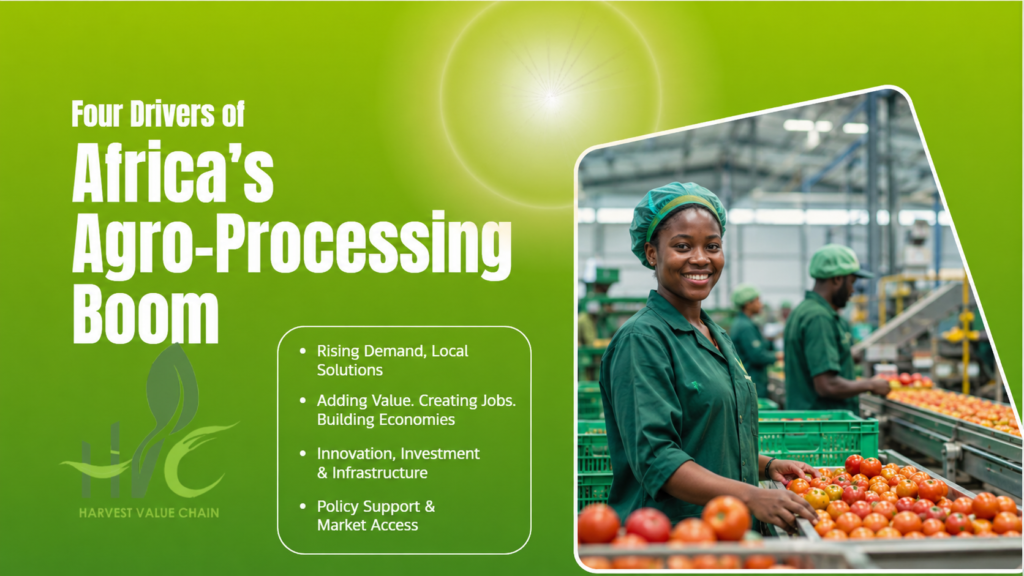
1. Powering the AfCFTA Revolution
The African Continental Free Trade Area (AfCFTA) creates a single market of over 1.3 billion people, offering unprecedented opportunities for intra-African trade in value-added agricultural products (UNCTAD, 2024). Trading raw maize or cassava across borders is bulky, expensive, and prone to spoilage. In contrast, trading shelf-stable packaged foods, fortified flour, or processed cooking oils is more efficient, expands regional trade, and keeps more economic value within the continent.
2. Meeting the Needs of a Rapidly Urbanizing Population
Africa’s cities are growing faster than almost anywhere else in the world. Urban consumers increasingly demand convenience pre-washed vegetables, ready-to-cook grain mixes, long-life dairy products, and locally produced packaged snacks. Demand for processed foods is expected to grow substantially over the coming decade, creating enormous opportunities for local food processors (UNCTAD, 2024).
3. Turning Waste into Wealth
Smallholder farmers lose a significant share of their potential income because crops spoil during transportation or periods of market oversupply. Processing facilities located close to farming communities can transform fresh produce within hours of harvest, converting what would have become waste into market-ready products (FAO, 2019).
4. Creating Jobs Across the Value Chain
Primary agriculture often provides seasonal, low-income employment. Agro-processing creates higher value, year-round opportunities for machine operators, food scientists, packaging specialists, logistics managers, quality assurance professionals, sales teams, and digital marketers. It also makes agriculture more attractive to young entrepreneurs and skilled professionals.
What It Takes to Win: The High-Yield Playbook
Building a successful agro-processing business in Africa requires addressing several structural challenges. Successful businesses are focusing on four key pillars:
- Decentralized Processing Facilities: Establishing modular processing plants close to farming communities to reduce transportation time and minimize post-harvest losses.
- Cold Chain and Clean Energy Integration: Investing in solar-powered cold storage, drying systems, and other reliable energy solutions to overcome inconsistent electricity supply.
- Consumer-Centric Branding: Prioritizing food safety certifications, sustainable packaging, and compelling brand storytelling to compete effectively with imported products.
- AgTech and Traceability: Using digital technologies to connect directly with farmers, strengthen supply chains, improve transparency, and ensure farm-to-table traceability.
The Bottom Line: From Breadbasket to Processing Powerhouse
Africa has already proven it can supply the world with abundant agricultural raw materials. The next frontier is supplying global markets with high-value, finished products proudly made in Africa.
For entrepreneurs, investors, and innovators, the real opportunity is not just beneath the soil; it lies in what happens after the harvest. The transition from commodity producer to value creator is already underway, and those who invest in the right infrastructure today will help shape and benefit from the agricultural economy of tomorrow.
Leave a Reply